ROCK CISTUS (CISTUS SPP.)
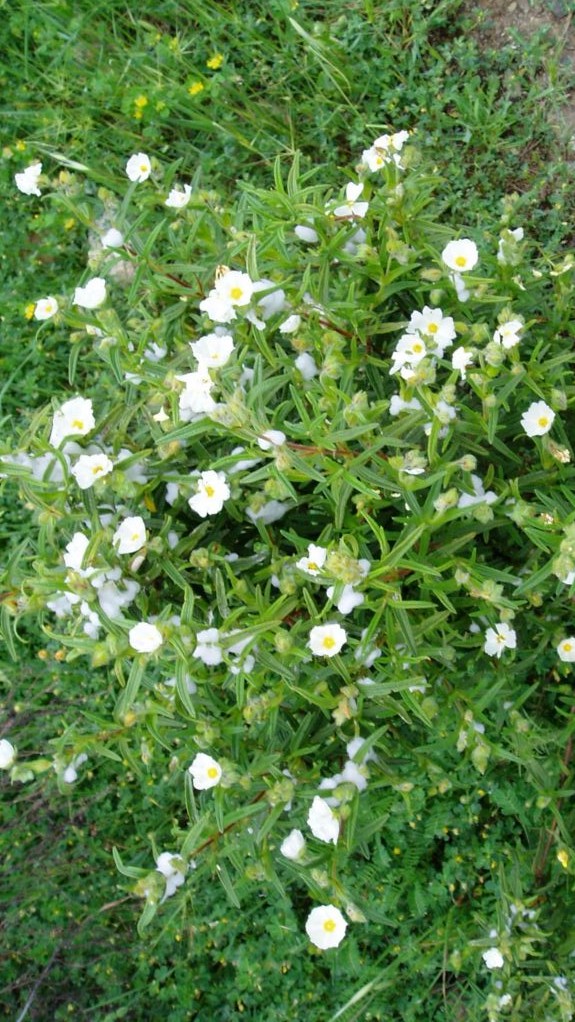
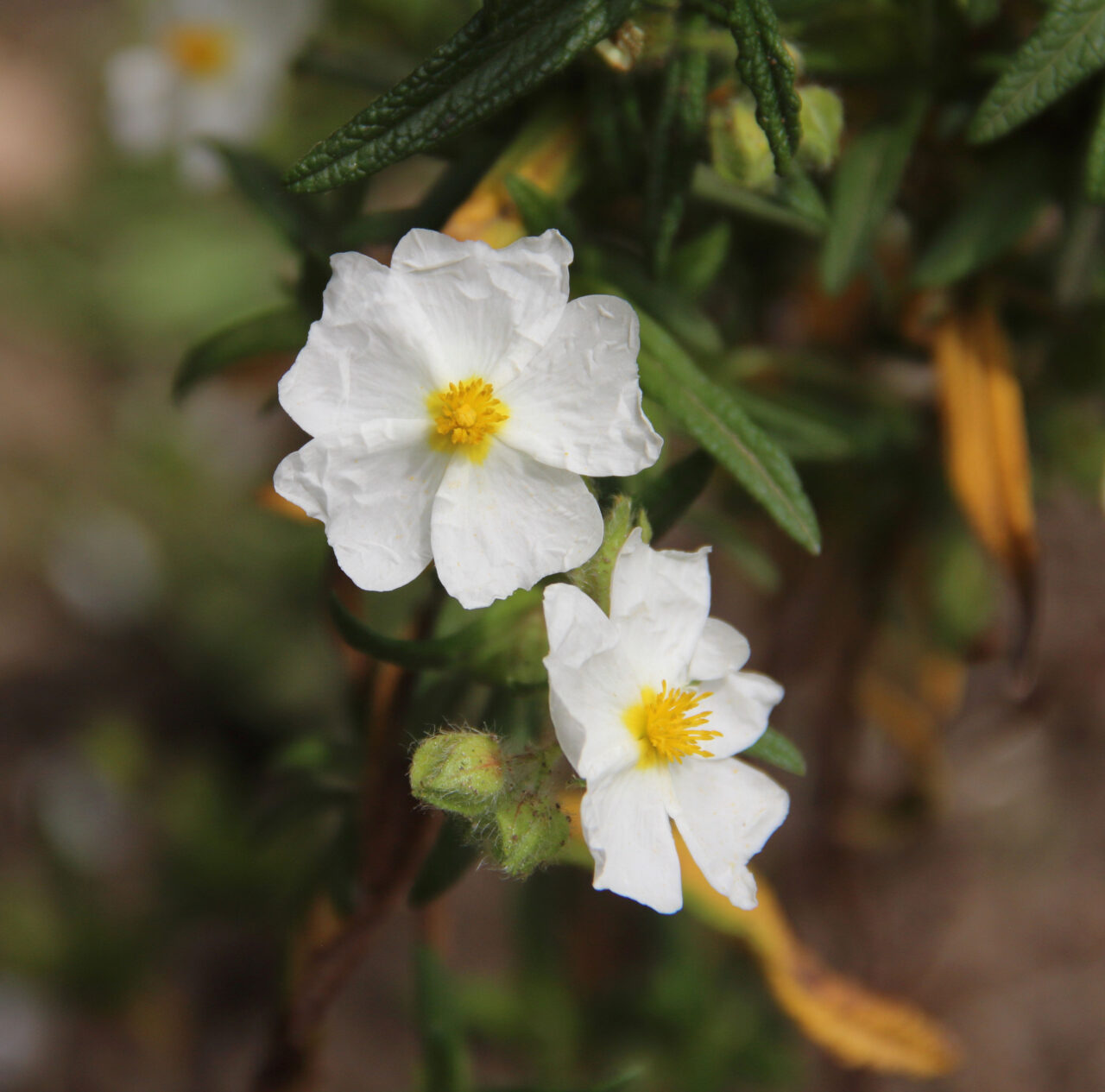
Botanical Description: Small evergreen shrub with leaves that are often sticky to the touch (due to the resin). The flowers are large, with “crumpled” petals resembling tissue paper, white or pinkish-purple in color.
Ecological Introduction: It is a “pyrophytic” species: its seeds resist the heat of fire and germinate vigorously immediately after a fire, allowing the bush to regenerate.
Special Features: Many cistus species produce labdanum, a highly fragrant resin used in perfumery as a fixative and for its amber notes.
The cistus is one of the most fascinating and resilient plants in the Mediterranean scrub, a shrub that seems to hold the secret of rebirth. Amidst sun-drenched rocks, arid soil and windswept slopes, its intense scent and delicate blooms show the return of life even after the most difficult seasons.
Botanically, Cistus spp. is a small evergreen shrub characterized by leaves often covered with aromatic resins that make them slightly sticky to the touch. Its flowers, large and fragile in appearance, resemble freshly crumpled tissue paper: thin, luminous petals that can be white or pinkish-purple, often decorated with darker spots at the bottom. Their beauty is ephemeral, as each flower lives only a few hours but the plant continues to bloom generously throughout the warm season.
In the Mediterranean ecological context, the cistus plays a fundamental role. It is, in fact, a pyrophytic species, extraordinarily adapted to the natural fires that have always been part of the dynamics of these ecosystems. Its seeds are able to withstand the heat of fire and germinate with particular vigor immediately after a fire, contributing to the rapid regeneration of the Mediterranean scrub. Where the soil looks burned and silent, cistus is often among the first plants to restore color, fragrance and life.
For centuries, cistus has also been linked to human history and Mediterranean rituals. Many species produce the precious labdanum, an aromatic resin with a warm, amber and balsamic scent, used since ancient times in perfumery as a natural fixative. Its intense aroma was appreciated in the temples and sacred rituals of Mediterranean civilizations, while in some popular traditions, the smoke from the resin was used to purify environments and ward off evil spirits.
According to ancient legends, the cistus was born from the tears of the sun that fell on the arid earth during the hottest summers: for this reason, it is often considered a symbol of resistance, rebirth and the ability to flourish again after adversity.
Even today, the cistus represents one of the most poetic emblems of the Mediterranean scrub: a plant capable of transforming the harshness of the climate into beauty, spreading ancient scents among the rocks and blooms as light as paper in the wind.