A landscape suspended between memory and dreams in Campi Salentina
Rural Park Madonna dell’Alto
PNRR – M1C3 Turismo e cultura – Misura 2 Rigenerazione, competitività e cultura – Investimento 2.2 : “Protezione e valorizzazione dell’architettura e del paesaggio rurale”. Insediamenti in località Madonna Dell’Alto in Campi Salentina (LE) Parco Rurale Madonna Dell’Alto
CUP: B28C25000970004- ID DOMANDA: PNRR – M1C3 – 2.2 – 2022 – 005943 – N. PROGRESSIVO: P1263

Where nature, history and architecture meet
In Apulia, and particularly in Salento, historical and artistic heritage is deeply woven into the landscape. Churches, rural chapels and underground spaces emerge across the countryside as silent witnesses to a past that is still very much alive.
These are places of rare charm, where history, art and faith intertwine harmoniously, creating, over the slow passage of centuries, landscapes of extraordinary beauty.
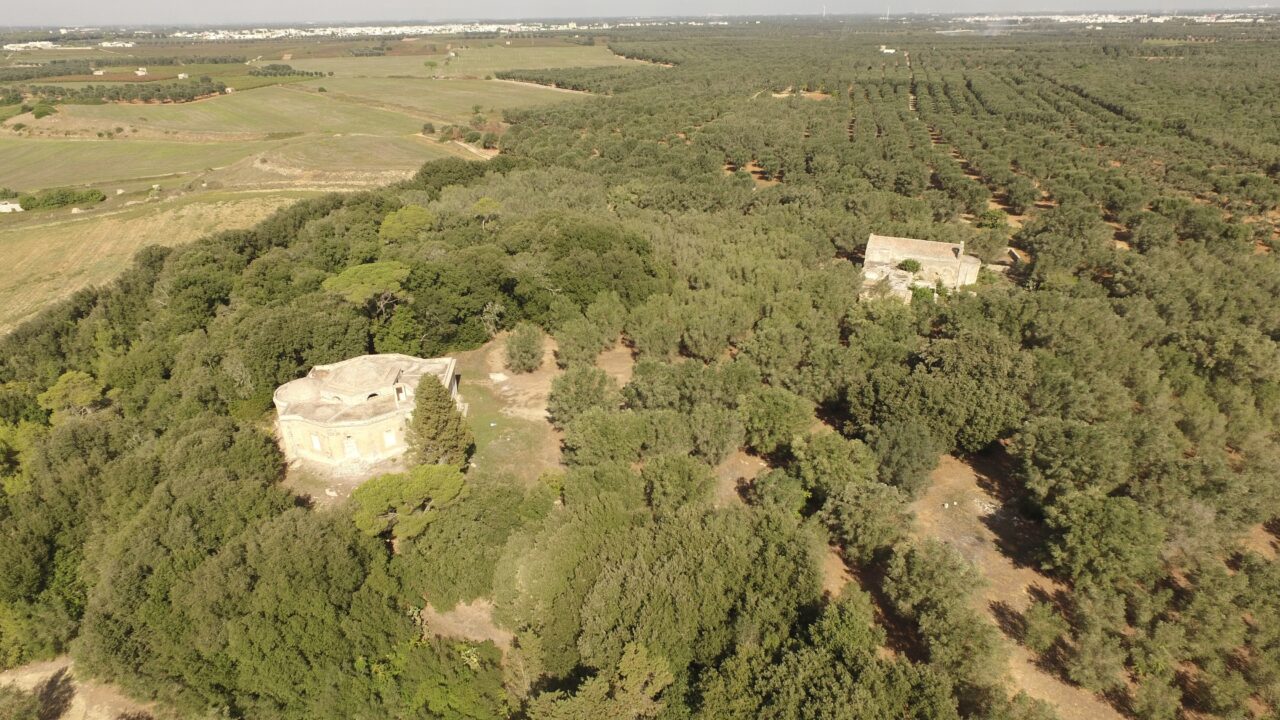
In this area, within the municipality of Campi Salentina, along the ridge of the Serre di Sant’Elia, a remarkable place stands on a rocky slope that defines the surrounding landscape.
The particular morphology of the territory and, above all, its topography may have favoured the concentration of a number of wonderful architectural structures in this very location: authentic expressions of faith and devotion, preserved over time as precious evidence of local history and spirituality.
The area is now known as “Madonna dell’Alto”, after the church located here. Over the centuries, however, it was known by other names, including “Bagnara”, “Santa Maria de Bagnara” and “Madonna del Latte”.
In homage to this historic place name, the Rural Park was named “Rural Park Madonna dell’Alto”. Its identity is inseparably linked to the landscape in which it stands, with the wooded area forming its connective tissue.
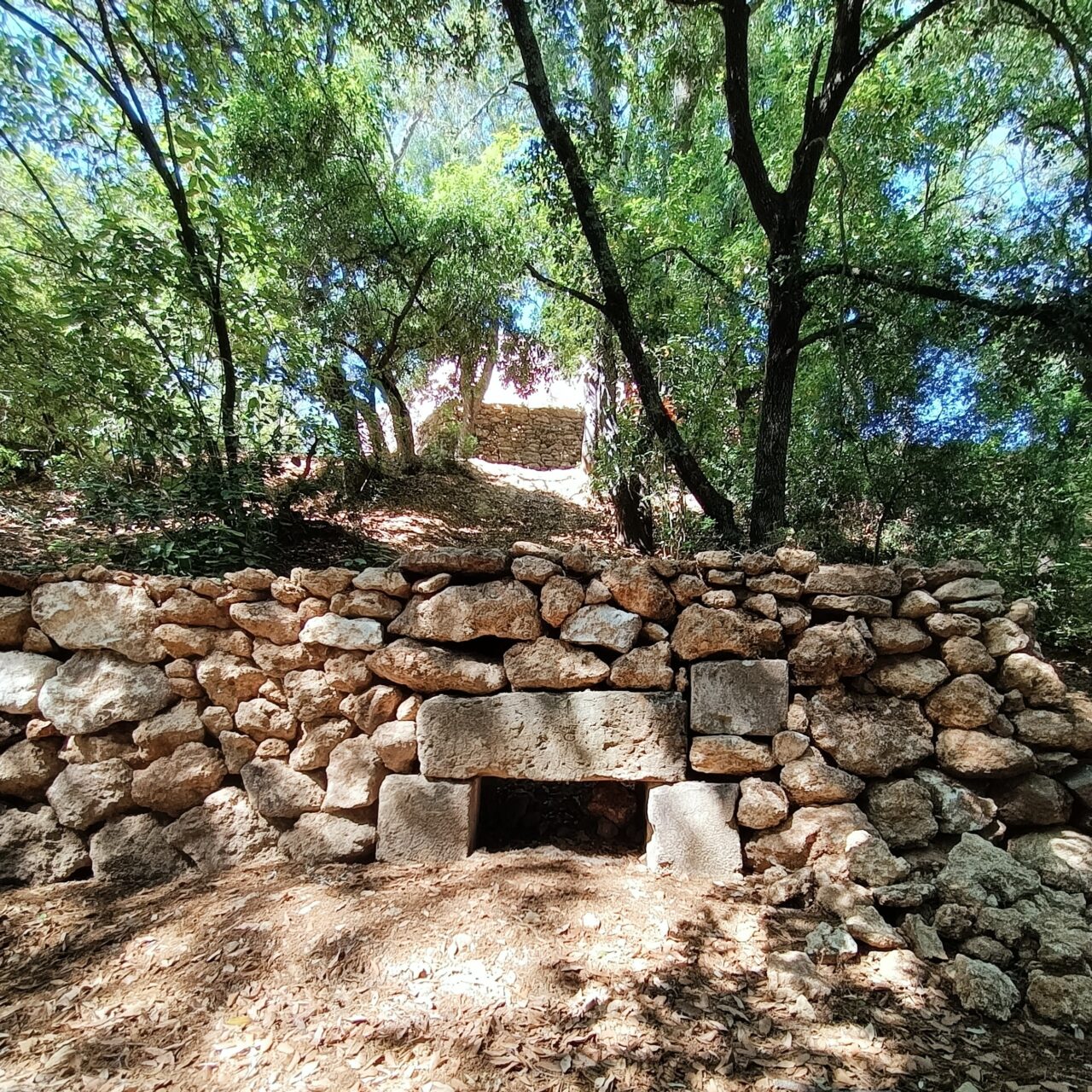
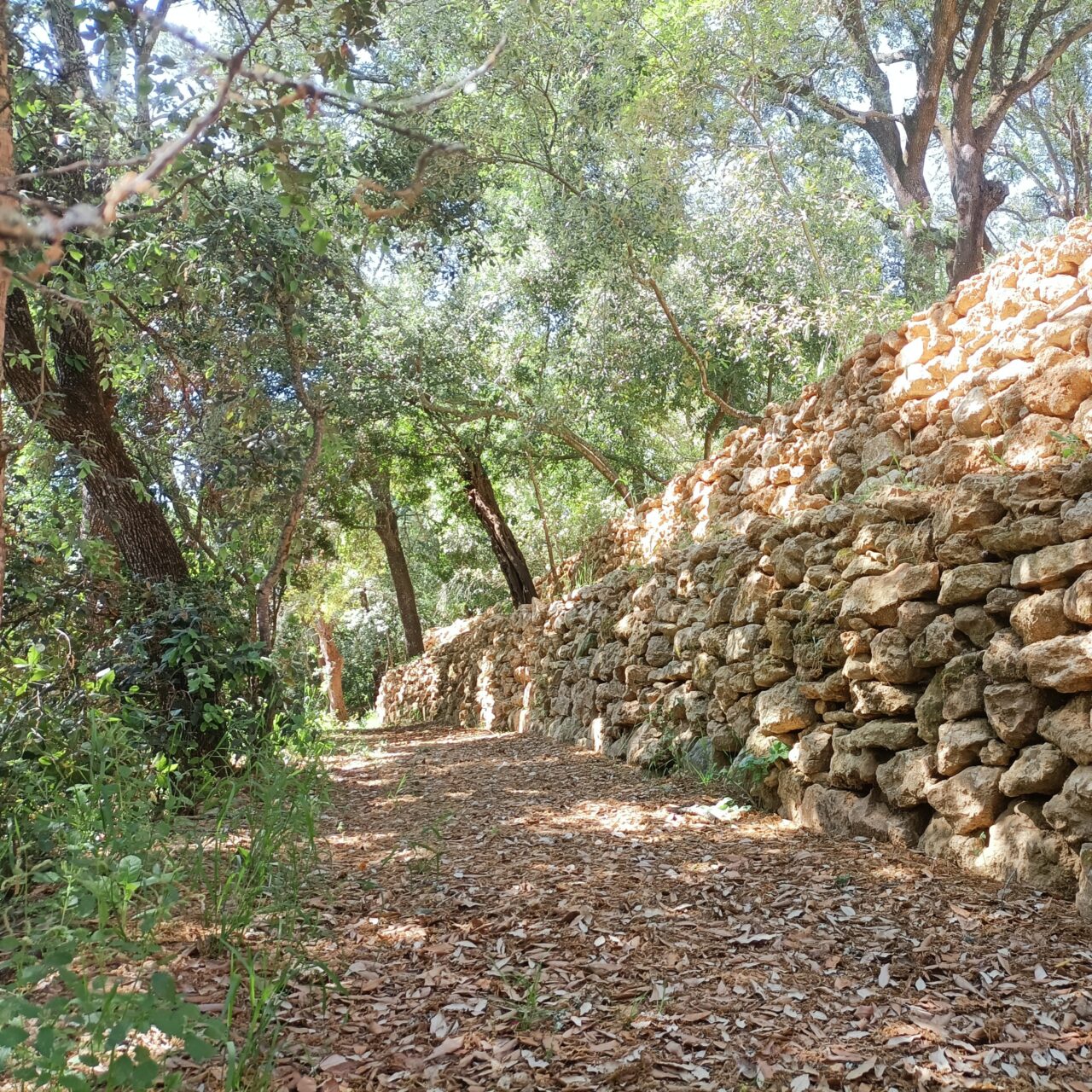

A heritage to preserve
Today, the Madonna dell’Alto Rural Park represents a remarkable example of layered historical heritage, in which every architectural element, decoration and transformation tells part of the story of the monuments that can still be seen today.
Reading these layers makes it possible to reconstruct not only the evolution of the landscape and its buildings but also the story of the community that inhabited, visited and shaped this place over time.
The protection, research and enhancement initiatives undertaken have helped bring the site back to light and restore its full historical, cultural and identity value, strengthening the local community’s awareness of its importance and of the role it plays within the wider territory.
From this perspective, the launch of a systematic programme of archaeological research in the area could represent another significant step forward.
A structured scientific investigation involving field surveys, documentation and, where necessary, stratigraphic excavation could provide new evidence and reveal further elements useful for reconstructing the historical and settlement history of the site.
The results could expand current knowledge, help define the function and development of the area over time with greater precision and further strengthen its cultural and historical significance within the community and the wider territory of Campi Salentina.
This area is not merely a material testimony to the past. It is a living and dynamic resource, capable of engaging with the present while looking towards the future.
Its historical value represents a cultural asset of extraordinary importance which, through appropriate measures of protection, care and enhancement can become a genuine driver of growth.
Its potential goes far beyond the simple preservation of heritage. Historic buildings can become a focal point for culture, research, education and sustainable tourism contributing to the strengthening of local identity and the creation of new opportunities for development.
With a strategic and shared vision, the park can provide significant momentum for cultural, social and economic innovation, encouraging virtuous processes of regeneration and enhancement throughout the territory.

Villa Balsamo
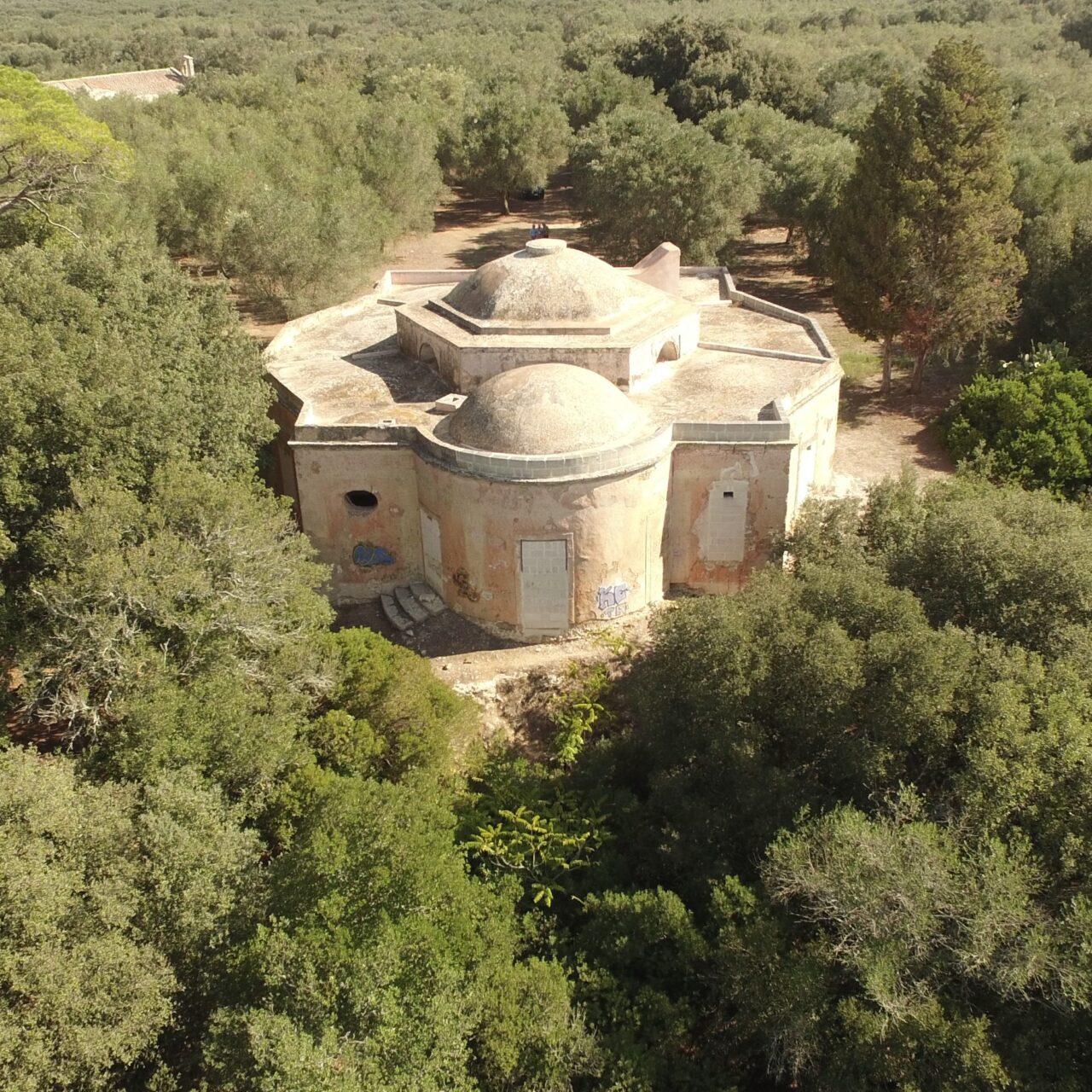
In harmony with this setting, at the heart of this landscape suspended between memory and dreams, stands Villa Balsamo, an architectural landmark that seems to breathe with time itself, as though its stones had learned the language of the wind, scents and seasons.
Its forms, both gentle and imposing, rest upon the landscape with the grace of a memory that refuses to fade, adding a subtle and ancient depth to the surrounding scenery.
Immersed in the tranquillity of the Salento countryside, the villa is a refined example of an 19th-century residence, where architectural elegance and timeless charm come together in harmony.
Used as a summer residence until the 1950s, it still retains the character and atmosphere of a place that tells the story of the history and traditions of this territory.
Church of Madonna dell’Alto
The Church of Santa Maria dell’Alto stands at more than 50 metres above sea level in the countryside between Campi Salentina and Squinzano, within the area known as the “Serre di Sant’Elia”, historically connected to the ancient Bagnara settlement, which has since disappeared.
The discreet presence of this sacred building among the olive trees seems to accompany the calm rhythm of the extensive countryside surrounding it.
Its history spans several different periods, and after a long period of abandonment, the building has reached us in an advanced state of deterioration.
At the beginning of the 1970s, in fact, the church was already in very poor condition: the building had completely lost its roof and the interior spaces had been overtaken by vegetation.

A place for everyone
The Madonna dell’Alto Rural Park in Campi Salentina was created with the aim of rescuing a place which was rich in history and nature and protect it from neglect and vandalism, preserving it so that it can be passed on intact to future generations.
It is a project founded on environmental sustainability, inclusion and accessibility, designed to make this heritage accessible to everyone while respecting and protecting the surrounding environment.

Inclusion

Protection and preservation of historical memory

Accessibility