PISTACIA LENTISCUS (LENTISCUS)
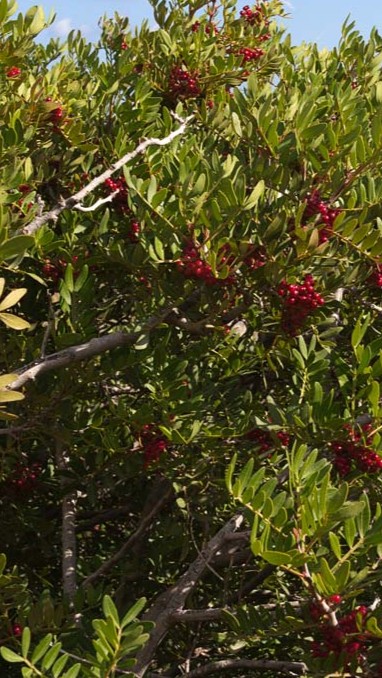
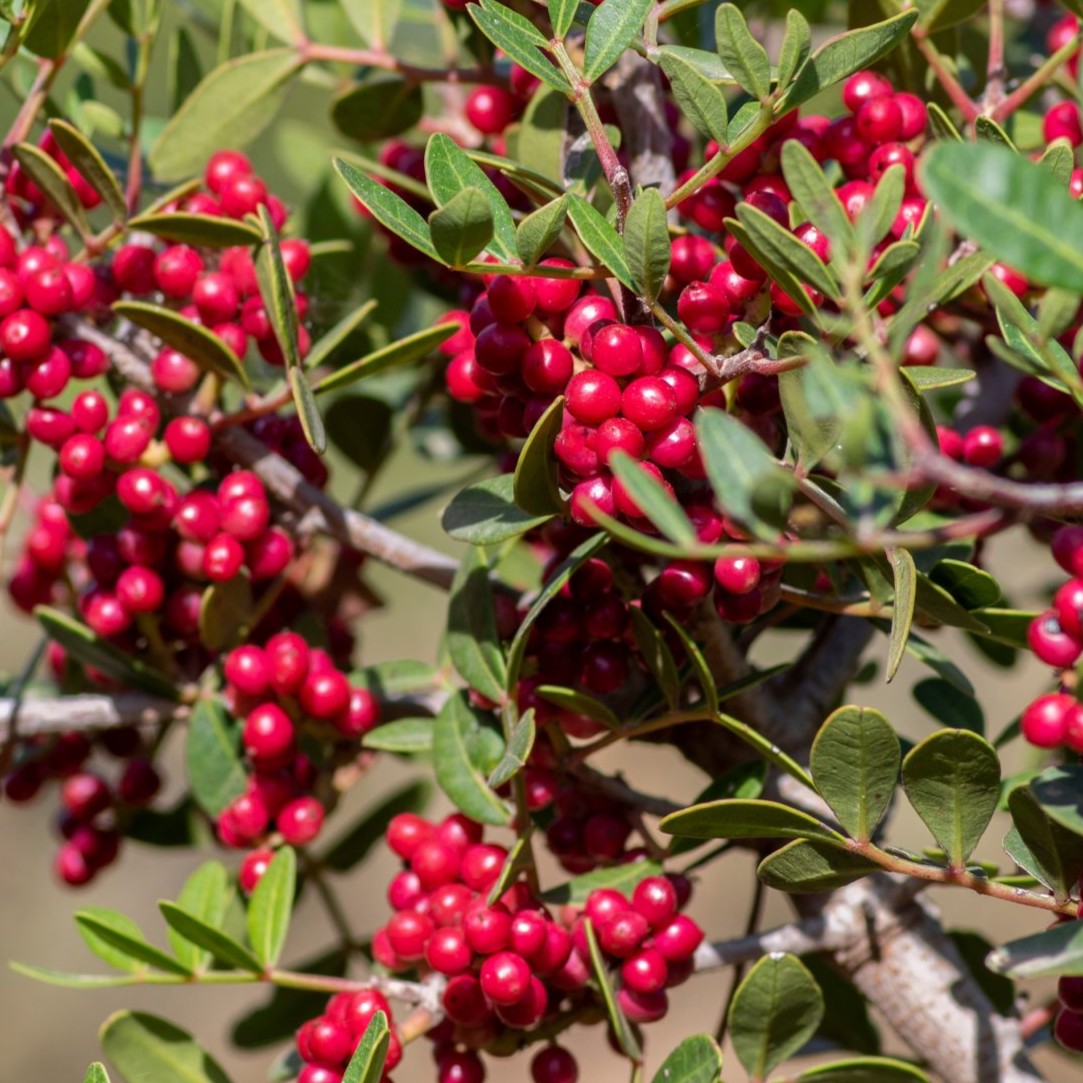
The mastic tree is an evergreen shrub typical of the Mediterranean scrub, widespread in coastal and hilly areas. It can reach a height of 2 – 4 meters and has a dense crown with small, leathery, deep green leaves.
In spring, it produces small, inconspicuous flowers, while in autumn, round berries appear that ripen from red to black.
The mastic tree is highly resistant to drought, wind and salt, thus playing an important role in protecting the soil from erosion. In the past, its aromatic resin was used to make mastic, used for medicinal and artisanal purposes.
Ecological Integration: A pioneer and very hardy species, it is essential for consolidating soil and preventing erosion. It is highly resistant to salt and strong winds.
Curiosities and traditional uses
In some Mediterranean regions, the berries were used to produce a vegetable oil used in lamps and soaps.
The bark yields an aromatic resin called mastic, used since ancient times for perfumes, medicines and as a natural chewing gum.
The mastic tree is one of the oldest and most representative plants of the Mediterranean scrub, an evergreen shrub that has graced the landscape of sunny coasts and windswept hills for centuries. Its discreet yet tenacious presence speaks to the strength of Mediterranean nature, capable of thriving even in the most arid and difficult terrain.
Botanically, the Pistacia lentiscus is a dense, branched shrub that can reach 2-4 meters in height. Its compact crown is made up of small, leathery leaves of a deep, glossy green, capable of retaining moisture and withstanding long, dry summers. In spring, it produces tiny, inconspicuous flowers, often hidden among the foliage, while in autumn it fills with rounded berries that, as they ripen, turn from bright red to deep black, adding splashes of color to the Mediterranean landscape.
In the delicate ecological balance of the Mediterranean scrub, the mastic tree plays a fundamental role. It is a pioneer and particularly hardy species, capable of colonizing poor, stony or degraded soils. Its roots help consolidate the soil and limit erosion, especially in coastal areas exposed to wind and salt. Thanks to its extraordinary resistance to atmospheric agents, the mastic tree represents one of the vegetal pillars of the most extreme Mediterranean ecosystems.
Since ancient times, this plant has been deeply connected to the daily life of Mediterranean populations. Its bark yields a precious aromatic resin called mastic, prized for its balsamic scent and used for centuries as a medicinal remedy, an ingredient in perfumes and even as a natural chewing gum. Mastic was considered so precious that it was traded along ancient Mediterranean routes, especially in Greek and Arab cultures.
Mastic berries were also used in rural tradition: in some Mediterranean regions, they were pressed to obtain a vegetable oil used in humble diets, in the production of artisanal soaps and as fuel for oil lamps.
In popular symbolism, the mastic tree was considered a protective plant. Its resinous scent was associated with purification and the life force of the earth while its branches were sometimes used in peasant rituals as a sign of prosperity and resistance.
Even today, the mastic tree continues to represent the most authentic soul of the Mediterranean scrub: a silent yet tenacious plant, capable of transforming wind, salt and drought into life, fragrance and the memory of the Mediterranean landscape.